Discover how protein powder supports muscle repair, weight management, and overall health. Learn about its benefits, types, and considerations before use.
Introduction
Protein powder has become one of the most popular supplements in the world, and for good reason. Whether you’re an athlete, a gym regular, or someone just trying to eat a little healthier, you’ve probably wondered what all the hype is about.
So, what does protein powder actually do? At its core, it’s a convenient way to help your body get enough protein. A vital nutrient that supports muscle repair, weight management, and overall health. But while it can be an incredibly useful supplement, it’s not a magic fix. Like any nutrition tool, its effectiveness depends on how and when you use it.
In this guide, we’ll break down how protein powder works, its main benefits, and what to consider before adding it to your routine.
What Is Protein Powder?
Protein powder is a dietary supplement designed to help people meet their daily protein needs more conveniently. It’s made by extracting protein from animal or plant sources such as whey, casein, soy, rice, pea, egg, or collagen. Then Processing it into a powdered form that can be mixed with water, milk, or smoothies.
Common Types of Protein Powder
- Whey Protein: Derived from milk, it’s fast-digesting and rich in essential amino acids, great for post-workout recovery.
- Casein Protein: Also from milk, but digests more slowly, making it ideal before bedtime to support overnight recovery.
- Plant-Based Proteins: Made from sources like soy, pea, brown rice, and hemp. Perfect for vegans or those with lactose intolerance.
- Egg White Protein: A clean, easily digestible option with no dairy.
- Collagen Protein: Supports joint, skin, and connective tissue health rather than muscle building.
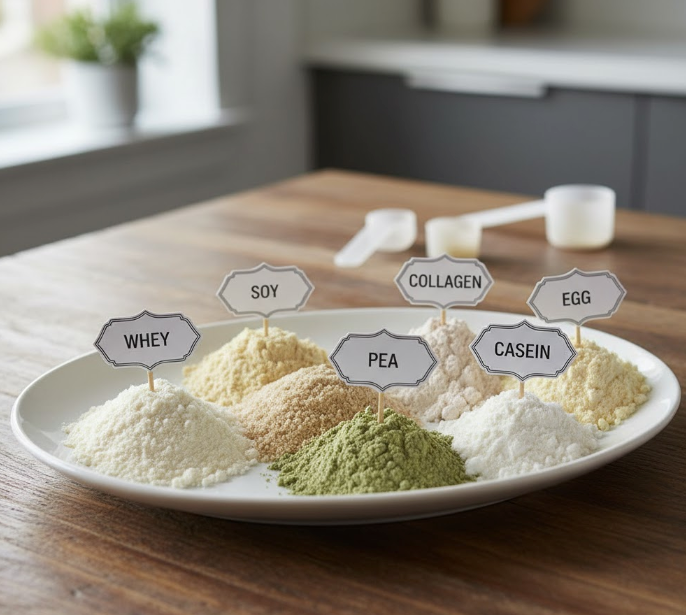
Infographic showing types of protein powder including whey, soy, rice, pea, casein, collagen, and egg, with icons and descriptions of their benefits and whether they are plant-based or animal-based
How Does Protein Powder Work?
To understand how protein powder works, it helps to understand what protein does in the body.
Protein is made up of amino acids, the “building blocks” of muscle, skin, enzymes, and hormones. When you eat protein (whether from chicken, tofu, or a protein shake), your body breaks it down into amino acids, which are then used to repair and build tissues, produce enzymes, and support immune function.
Post-Workout Recovery
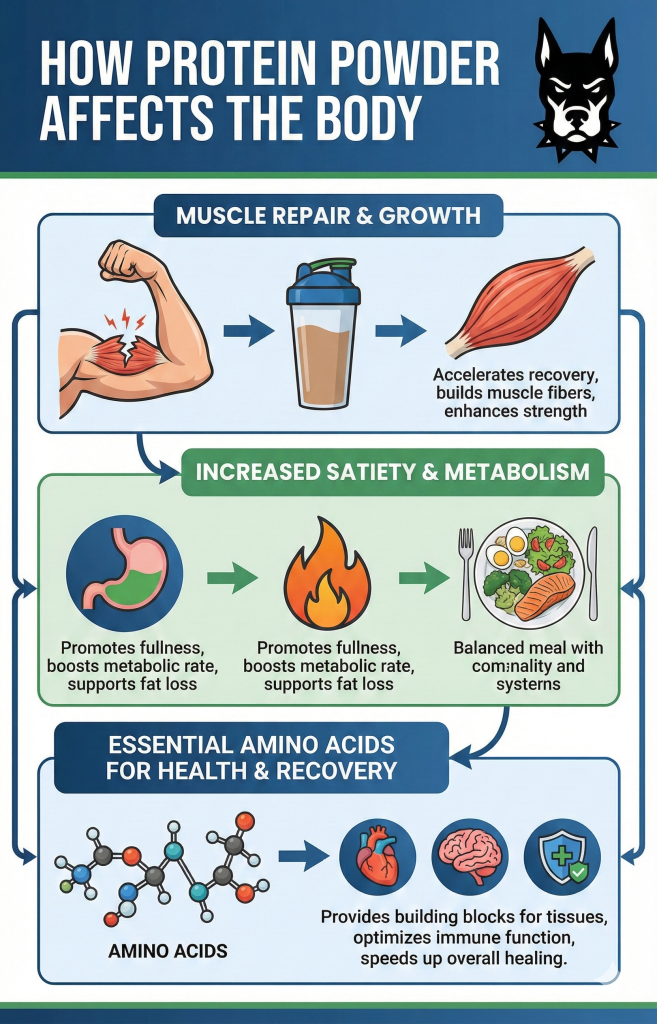
When you exercise, especially strength training, small tears form in your muscle fibers. Consuming protein soon after a workout provides your body with the amino acids it needs to repair those tears, resulting in stronger, larger muscles. This is why protein powder is often used within 30 minutes of working out.
Convenience and Consistency
Getting enough protein from whole foods alone can be challenging, especially for people on the go. Protein powder offers a quick, low-prep solution that makes it easier to meet daily protein goals, particularly important for athletes, vegetarians, and older adults.
Learn more about the science of protein intake and muscle growth.
Benefits of Protein Powder
1. Muscle Building and Repair
This is the most well-known reason people use protein powder. Studies consistently show that adequate protein intake, especially when paired with resistance training, helps stimulate muscle protein synthesis, the process your body uses to repair and grow muscle tissue.
Protein powder can make hitting your protein targets more achievable, especially post-workout when your muscles are primed for recovery.
Whey protein, in particular, has been shown to boost muscle repair and growth more effectively than most other protein sources due to its fast absorption rate and complete amino acid profile.
2. Weight Management and Appetite Control
Protein plays a major role in satiety, it helps you feel full longer, which can reduce snacking and overall calorie intake.
By adding a protein shake between meals or after workouts, many people find it easier to manage their appetite and maintain a calorie deficit for fat loss. Additionally, protein helps preserve lean muscle during weight loss, ensuring that the weight you lose comes from fat, not muscle.
Research also suggests that protein-rich diets can slightly boost metabolism, since protein requires more energy to digest compared to carbs or fats.
3. Support for Immune Function and Overall Health
Protein isn’t just about muscle, it’s essential for nearly every process in your body. Enzymes, antibodies, and hormones all rely on amino acids from protein.
Certain proteins, such as whey, are rich in immunoglobulins and lactoferrin, which may help support immune health. Meanwhile, collagen-based protein powders can benefit joint strength and skin elasticity, which is especially valuable as we age.
In other words, while protein shakes are often associated with the gym, their benefits reach far beyond it, supporting everything from immune defense to tissue repair.
Considerations Before Using Protein Powder
While protein powder offers several benefits, it’s not without its caveats. Before you jump into daily shakes, it’s important to understand the potential downsides and best practices for safe use.
1. Not a Replacement for Whole Foods
Protein powder should supplement, not replace, a balanced diet. Whole foods like chicken, fish, beans, and lentils offer additional nutrients that powders don’t, such as fiber, vitamins, and minerals.
Think of protein powder as a convenient addition, not a meal substitute.
2. Potential Side Effects and Quality Concerns
Some protein powders can contain added sugars, artificial flavors, or heavy metals, depending on the brand. Consumer Reports testing has found trace amounts of lead, arsenic, and cadmium in certain products.
Common side effects can include:
- Digestive discomfort (especially with whey if you’re lactose intolerant)
- Bloating or gas
- Excess calorie intake if you’re drinking multiple shakes per day
To minimize risks, choose a third-party tested protein powder with transparent labeling and minimal additives. Look for certifications like NSF Certified for Sport or Informed Choice.
3. Individual Protein Needs Vary
How much protein you need depends on your age, weight, activity level, and goals.
As a general guideline:
- Average adults: ~0.8 grams of protein per kilogram of body weight
- Active individuals: 1.2–2.0 grams per kilogram
- Athletes or those building muscle: up to 2.2 grams per kilogram
Consuming significantly more than your body needs won’t necessarily build more muscle, and can strain your kidneys over time if you already have underlying health conditions.
Before adding supplements, it’s smart to consult a healthcare provider or registered dietitian to find your optimal intake.
For more guidance, check out choosing the right protein supplement.
Conclusion
Protein powder is one of the most useful and versatile supplements available today. It can:
- Support muscle repair and growth
- Aid in weight management
- Boost immune health
- Help fill dietary protein gaps
However, it’s important to remember that protein powder is just that, a supplement. The foundation of a healthy diet should still come from whole, nutrient-dense foods.
Before making it part of your daily routine, take a step back and assess your overall diet and lifestyle. Do you truly need more protein? Are you already getting enough from food? A short chat with your healthcare provider can help ensure you’re supplementing smartly, not blindly.
Used correctly, protein powder can be an incredibly effective way to support your health and fitness goals, one scoop at a time.