
If you train hard but don’t eat enough protein, you’re leaving muscle gains on the table. Period.
Protein isn’t optional for muscle growth—it’s the raw material your body uses to repair and build muscle tissue after training. But here’s the problem: not all protein is equal, and not every “muscle-building” protein product actually delivers results.
So what is the best protein for muscle gain?
This guide cuts through the hype and breaks down what actually works—based on research, real-world lifting, and results:
- The best types of protein for muscle growth
- Whey vs isolate vs casein (and when to use each)
- Whole-food protein sources that support lean mass
- How much protein you really need
- When to take protein for maximum muscle growth
No gimmicks. No influencer nonsense. Just what works.
What Makes a Protein Good for Muscle Gain?
Before ranking the best protein options, you need to understand what actually drives muscle growth.
Muscle is built through a process called muscle protein synthesis (MPS). Resistance training stimulates MPS, but protein supplies the amino acids required to make it happen. Without enough high-quality protein, muscle growth stalls.
Research consistently shows that protein sources that maximize MPS share a few key traits (Phillips & Van Loon, 2011; Morton et al., 2018).
The best protein for muscle gain checks these boxes:
1. High in Essential Amino Acids (EAAs)
Your body cannot produce essential amino acids on its own. You must get them from food or supplements.
2. Rich in Leucine
Leucine is the amino acid that flips the “on switch” for muscle growth. Proteins low in leucine stimulate less muscle protein synthesis.
3. Easily Digested and Absorbed
Faster digestion means faster delivery of amino acids to muscle tissue—especially important post-workout.
4. A Complete Protein Source
Complete proteins contain all nine essential amino acids. Incomplete proteins can still work, but they’re less efficient on their own.
Best Protein for Muscle Gain (Ranked by Effectiveness)
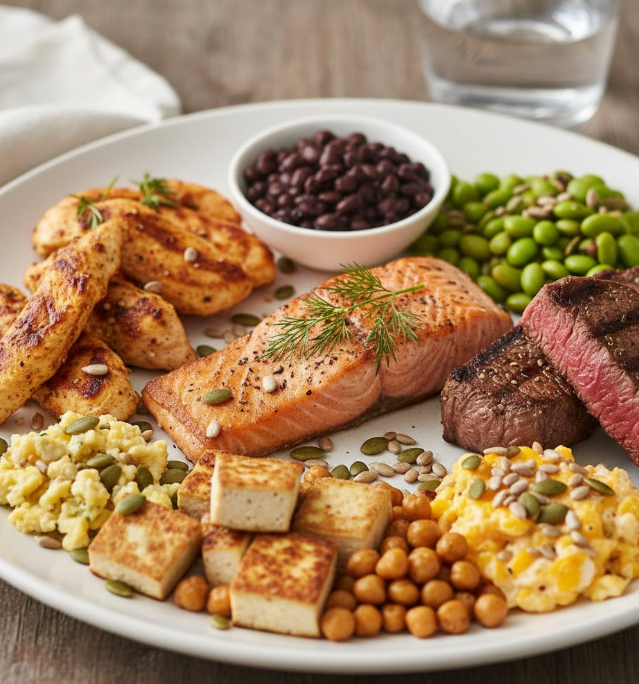
1. Whey Isolate — Best Protein for Muscle Gain Overall
If your goal is maximizing muscle growth as efficiently as possible, whey isolate is the clear winner.
Why whey isolate works best:
- Extremely high leucine content
- Fast digestion and absorption
- High protein per serving
- Low fat, carbs, and lactose
- Strong muscle protein synthesis response
Whey isolate is filtered to remove most lactose, fat, and carbs, leaving behind a highly concentrated protein source. Research consistently shows whey protein outperforms most alternatives for stimulating MPS.king, cutting, or anyone sensitive to lactose.
Best for:
Post-workout, lean bulking, cutting phases, lactose sensitivity
2. Whey Concentrate — Best Budget Protein for Muscle Gain
Whey concentrate is still an excellent muscle-building protein, especially if cost matters.
Pros:
- High leucine content
- Effective for MPS
- More affordable than isolate
Cons:
- Contains lactose
- Slightly more fat and carbs
If you tolerate dairy well, whey concentrate will still deliver strong muscle-building results.
Best for:
Bulking, beginners, budget-focused lifters
3. Casein Protein — Best Protein for Nighttime Muscle Recovery
Casein digests slowly, releasing amino acids over several hours. That makes it ideal during long periods without food—especially sleep.
Why casein matters:
- Reduces overnight muscle breakdown
- Supports long-term recovery
- Complements whey protein
Casein doesn’t spike MPS as quickly as whey, but it keeps muscles supplied with amino acids for longer.
Best for:
Before bed, long gaps between meals
4. Egg Protein — High-Quality Dairy-Free Option
Egg protein has one of the most complete amino acid profiles available and is highly digestible.
Pros:
- Complete protein
- High bioavailability
- Dairy-free
Cons:
- More expensive
- Less convenient than whey
Best for:
Dairy-free lifters and whole-food-focused diets
5. Beef Protein — Decent, but Overhyped
Beef protein powders are often aggressively marketed, but nutritionally, they don’t outperform whey.
Pros:
- Complete protein
- Dairy-free
Cons:
- Lower leucine content
- Often collagen-heavy
- Higher cost
Beef protein can help you hit protein targets, but it’s not superior for muscle gain.
6. Plant Protein — Works, but Requires Strategy
Yes, you can build muscle with plant protein—but it takes more planning.
Challenges:
- Lower leucine content
- Often incomplete amino acid profiles
- Slower MPS response
Blended plant proteins (pea + rice + soy) perform best. Research suggests slightly higher total protein intake is required to match animal-based proteins.
Best for:
Vegans, plant-based athletes, dairy intolerance
Protein Comparison Table
| Protein Type | Leucine | Digestion Speed | Best Use | Muscle Gain Rating |
|---|---|---|---|---|
| Whey Isolate | High | Fast | Post-workout | ⭐⭐⭐⭐⭐ |
| Whey Concentrate | High | Fast | Budget bulking | ⭐⭐⭐⭐ |
| Casein | Moderate | Slow | Before bed | ⭐⭐⭐⭐ |
| Egg Protein | Moderate | Medium | Dairy-free | ⭐⭐⭐⭐ |
| Plant Blend | Low–Moderate | Medium | Vegan diets | ⭐⭐⭐ |
Best Whole-Food Proteins for Muscle Gain
Supplements help—but real food should be the foundation.
Top whole-food protein sources include:
- Chicken breast
- Lean beef
- Turkey
- Eggs
- Salmon
- Tuna
- Greek yogurt
- Cottage cheese
- Lentils and beans (paired correctly)
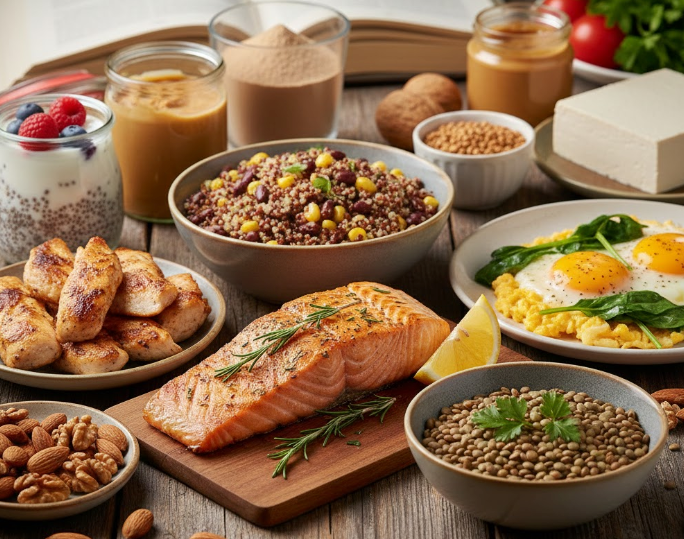
Whole foods provide vitamins, minerals, and calories that support training and recovery.
How Much Protein Do You Need for Muscle Gain?
This is where most people get it wrong.
Research supports a daily intake of 1.6–2.2 grams of protein per kilogram of body weight for optimal muscle growth (Morton et al., 2018).
That’s roughly:
- 110–150g for a 150-lb lifter
- 140–190g for a 180-lb lifter
- 160–220g for a 200-lb lifter
More protein doesn’t automatically mean more muscle—but too little guarantees slower progress.
When Should You Take Protein for Muscle Growth?
Post-Workout:
Fast-digesting protein like whey isolate delivers amino acids when muscles are most receptive.
Pre-Workout:
A small protein dose 1–2 hours before training helps reduce muscle breakdown.
Throughout the Day:
Spread protein evenly across meals. Aim for 25–40g per meal.
Before Bed:
Casein supports overnight recovery and reduces muscle breakdown.
Do You Need Protein Powder to Build Muscle?
No, but it helps.
Protein powder is:
- Convenient
- Easy to digest
- Cost-effective
- Ideal for hitting daily protein targets
If you struggle to eat enough protein from food alone, protein powder becomes a powerful tool.
While protein powder isn’t mandatory for muscle gain, understanding the truth about protein powder benefits can help you decide whether supplements make sense for your routine.
Frequently Asked Questions
What is the best protein for muscle gain?
Whey isolate is the best protein for muscle gain due to its high leucine content, fast digestion, and strong muscle protein synthesis response.
Is whey protein better than plant protein for muscle growth?
Whey protein generally stimulates greater muscle protein synthesis. Plant proteins can still work but often require higher doses or blended sources.
How much protein do you need to build muscle?
Most lifters need 1.6–2.2g of protein per kilogram of body weight per day for optimal results.
Can you build muscle without protein powder?
Yes. Whole foods can provide enough protein, but powders make consistency easier.
Final Takeaway: Best Protein for Muscle Gain
If muscle growth is your goal, whey isolate remains the best protein for muscle gain thanks to its leucine content, digestibility, and effectiveness.
But remember—protein isn’t magic:
- Train hard
- Eat enough
- Recover properly
- Stay consistent
Do that, and results follow.
Train hard. Eat smart. Build muscle with WARDOG.