Introduction
Walk into any gym and ask ten different people how much protein you need to build muscle, and you’ll get ten different answers. Some swear by eating their bodyweight in grams. Others claim you need 2 grams per pound. A few will tell you it doesn’t matter as long as you train hard.
Here’s the reality: protein requirements for muscle building are backed by decades of research, but the supplement industry has muddied the waters with exaggerated claims designed to sell more product. Understanding exactly how much protein you need can save you money, optimize your results, and eliminate the guesswork from your nutrition plan. Once you know your target intake, selecting the best protein for muscle gain becomes your next critical step in building an effective supplement strategy.
The Science Behind Protein Requirements
Your body needs protein for far more than just building muscle. Protein supports immune function, hormone production, enzyme creation, and tissue repair throughout your entire body. When you’re training hard and trying to build muscle, those requirements increase significantly.
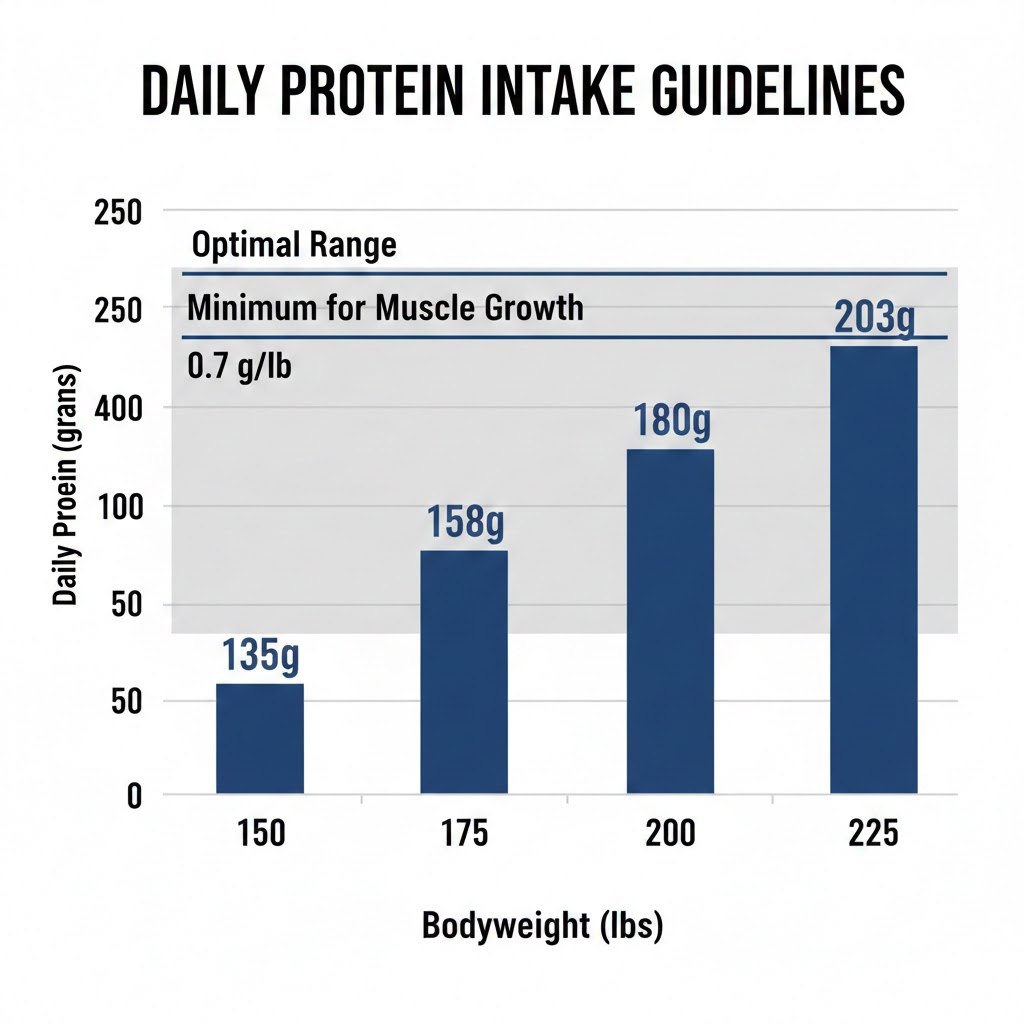
Research published in the Journal of the International Society of Sports Nutrition provides clear evidence-based recommendations: individuals engaged in regular resistance training should consume approximately 0.7 to 1.0 grams of protein per pound of bodyweight daily to maximize muscle protein synthesis and support recovery.
For a 180-pound lifter, that translates to roughly 126-180 grams of protein per day. This range accounts for individual variables like training intensity, experience level, and overall caloric intake.
Why More Isn’t Always Better
One of the biggest misconceptions in fitness is that consuming massive amounts of protein will accelerate muscle growth. If 150 grams is good, surely 300 grams must be twice as effective, right? Wrong.
Your body has a limit to how much protein it can utilize for muscle building at any given time. Once you’ve met your daily requirements and maximized muscle protein synthesis, additional protein doesn’t provide extra benefits for muscle growth. Instead, excess protein is either oxidized for energy, converted to glucose through gluconeogenesis, or in rare cases, stored as fat.
A landmark study in the American Journal of Clinical Nutrition examined protein intake ranging from moderate to very high levels in resistance-trained individuals. The results showed that consuming more than 0.8 grams per pound of bodyweight provided no additional muscle-building benefits.
This doesn’t mean eating extra protein is harmful—it just means you’re not getting additional gains from it. You’re better off optimizing your protein intake within the effective range and ensuring you’re also consuming adequate carbohydrates and fats to support training performance and overall health.
Factors That Influence Your Protein Needs
While the 0.7-1.0 grams per pound guideline works for most people, several factors can shift your individual requirements:
Training Volume and Intensity
If you’re training with extremely high volume—think multiple sessions per day or professional athlete-level training—your protein requirements may trend toward the higher end of the range. More training creates more muscle damage that needs repair.
Caloric Deficit
When you’re cutting body fat and eating in a caloric deficit, protein becomes even more critical. Research shows that increasing protein intake to 1.0-1.2 grams per pound during a cut helps preserve lean muscle mass while losing fat. Protein’s high thermic effect and satiating properties also make dieting more manageable.
Training Experience
Beginners often build muscle effectively with slightly lower protein intakes because their bodies are highly responsive to the training stimulus. Advanced lifters may benefit from the higher end of the protein range to continue making progress.
Age
Older adults (40+) may benefit from slightly higher protein intakes due to anabolic resistance—a reduced muscle protein synthesis response to protein consumption. For this demographic, trending toward 1.0 gram per pound can help maintain and build muscle more effectively.
How to Hit Your Protein Target
Understanding how much protein you need is one thing. Actually consuming it consistently is another. Here’s how to make it practical:
Spread Protein Throughout the Day
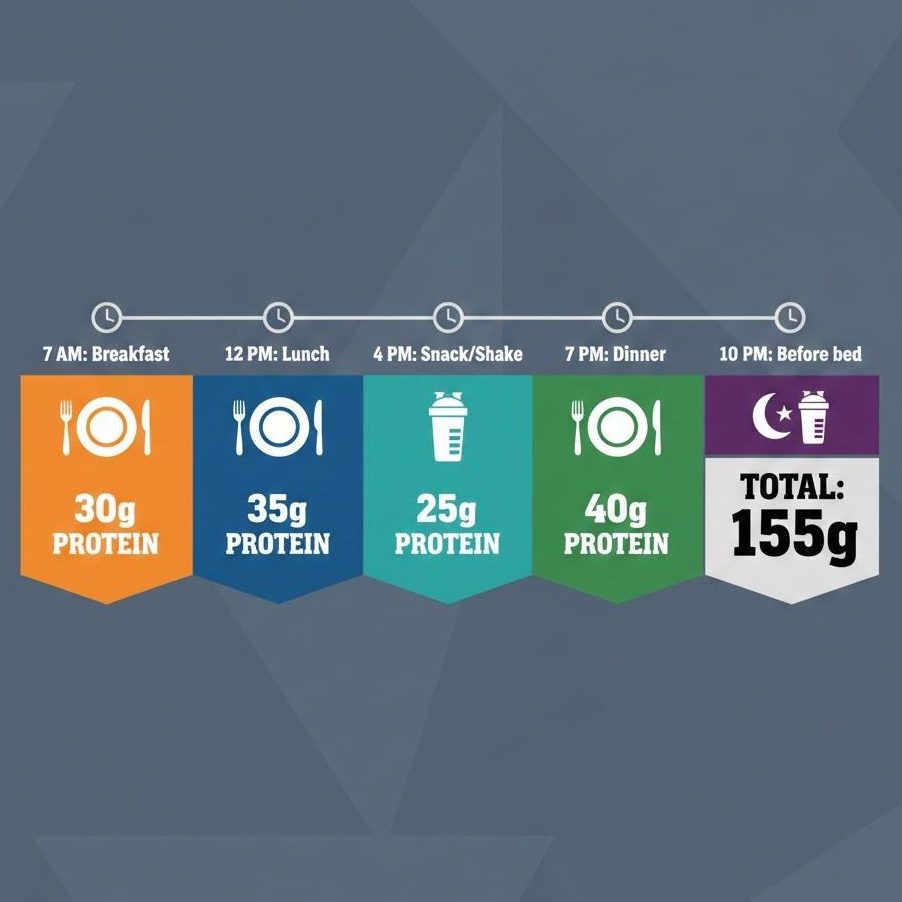
Rather than eating 100 grams of protein in one massive meal, distribute your intake across 3-5 meals. While protein timing isn’t as rigid as you might think, spreading your intake throughout the day optimizes muscle protein synthesis and keeps your body in a consistent anabolic state.
Prioritize High-Quality Sources
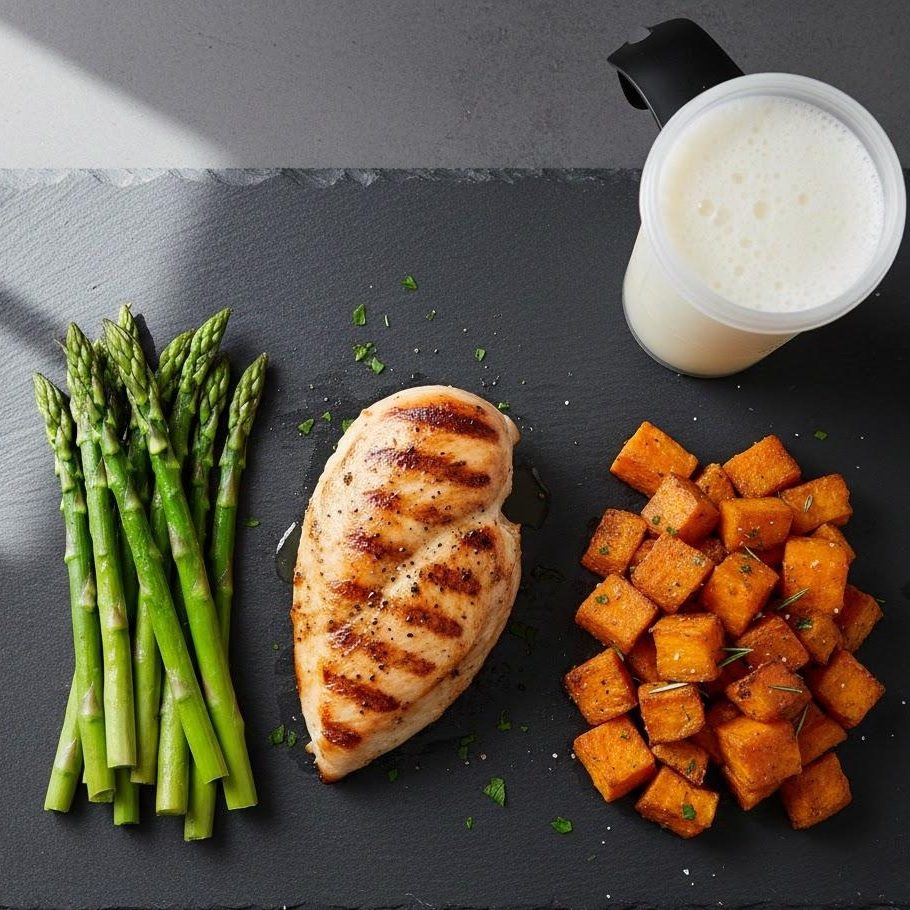
Not all protein sources are equal. Animal-based proteins like chicken, beef, fish, eggs, and dairy provide complete amino acid profiles with high leucine content—essential for triggering muscle protein synthesis.
If you’re plant-based, combine complementary protein sources (rice and beans, for example) and consider slightly higher total protein intake to account for lower digestibility and amino acid profiles. Our detailed comparison of whey protein vs plant protein breaks down exactly how these sources differ and how to optimize plant-based protein for muscle growth.
Use Protein Powder Strategically
Whole foods should make up the majority of your protein intake, but protein powder offers convenience when whole foods aren’t practical. A quality protein shake post-workout or as a snack between meals can help you hit your daily target without excessive meal prep.
When choosing the best protein for muscle gain, focus on quality over quantity—third-party tested whey isolate or concentrate from reputable brands delivers results without fillers or low-quality ingredients.
Common Mistakes to Avoid
Mistake 1: Ignoring Total Calories
You can eat all the protein in the world, but if you’re not consuming enough total calories, you won’t build muscle effectively. Protein is essential, but you also need adequate carbohydrates to fuel training and fats for hormone production. Don’t obsess over protein at the expense of overall nutrition.
Mistake 2: Neglecting Protein Timing
While the “anabolic window” isn’t as narrow as once believed, protein timing still matters. Consuming protein within a few hours of training supports optimal recovery.
Mistake 3: Buying Into “More Is Better” Marketing
Supplement companies profit when you believe you need excessive amounts of protein. Don’t fall for marketing that pushes 200-300 grams daily unless you’re a 250-pound competitive bodybuilder. Stick to evidence-based recommendations and save your money.
The Bottom Line
Building muscle requires adequate protein, but “adequate” is more moderate than most people think. For the vast majority of lifters, 0.7 to 1.0 grams per pound of bodyweight daily provides everything your muscles need to grow optimally.
More protein won’t necessarily hurt you, but it won’t accelerate your gains either. Focus on hitting your target consistently with high-quality sources, spread intake throughout the day, and ensure you’re training hard and eating enough total calories to support muscle growth.
The key to success isn’t eating the most protein—it’s eating the right amount consistently while training smart and recovering properly. Get these fundamentals right, and your results will follow.