If you’re serious about building muscle, you’ve probably stood in the supplement aisle or scrolled through endless online options wondering which protein powder is actually worth your money. The market is flooded with flashy labels, bold claims, and enough marketing BS to make your head spin. Here’s the truth: not all protein is created equal, and the wrong choice can cost you gains, waste your cash, and leave you spinning your wheels in the gym.
This isn’t about finding the “magic” protein that’ll transform your physique overnight. It’s about understanding what actually works, cutting through the noise, and making an informed decision based on science and performance—not marketing hype.
How Protein Builds Muscle
Before diving into which protein powder to buy, you need to understand how protein actually works and builds muscle. This isn’t complicated, but it’s foundational to making smart choices.
When you train hard—especially with resistance training—you create microscopic tears in your muscle fibers. This might sound bad, but it’s exactly what needs to happen. Your body responds to this stress by repairing those damaged fibers and building them back stronger and bigger through a process called muscle protein synthesis (MPS).
Muscle protein synthesis is your body’s muscle-building mechanism. Think of it as construction workers showing up to repair and reinforce a damaged building. But here’s the catch: those workers need raw materials to do their job. That’s where dietary protein comes in.
Protein provides amino acids—the building blocks your body uses to repair and grow muscle tissue. Without adequate protein intake, your body simply doesn’t have the materials it needs to maximize muscle growth, no matter how hard you train. You’re essentially asking construction workers to build without bricks.
Research consistently shows that consuming protein—particularly after training—triggers a robust muscle protein synthesis response. While the exact timing of your post-workout protein is more flexible than once believed, consuming adequate protein around your training sessions remains important for optimal results.
The key amino acid driving this process is leucine, one of the branched-chain amino acids (BCAAs). Leucine acts like a switch that turns on muscle protein synthesis. This is why protein sources high in leucine are particularly effective for muscle gain.
Types of Protein and Their Benefits
Not all protein sources deliver the same results. Understanding the differences between protein types helps you choose what aligns with your goals.
Whey Protein Concentrate
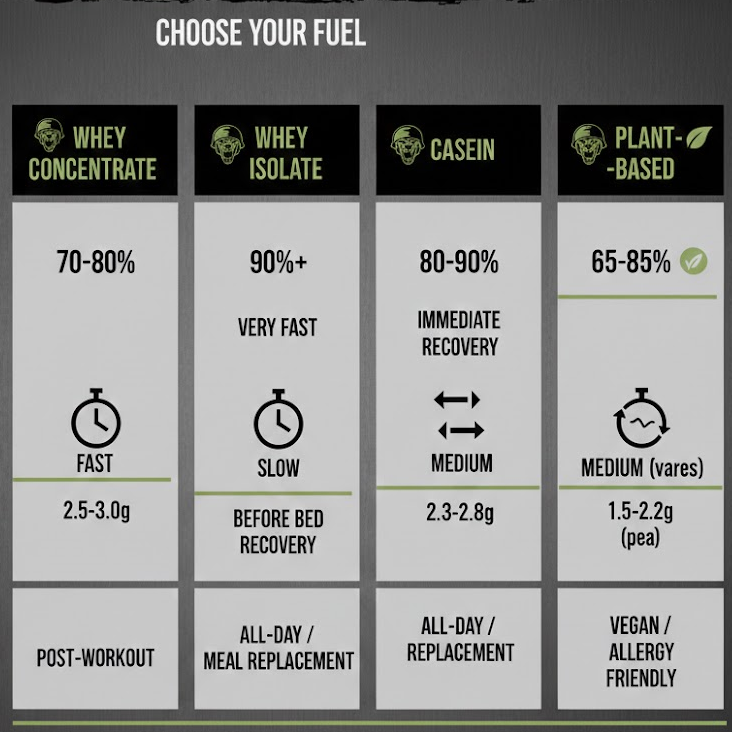
Whey concentrate is one of the most popular and cost-effective protein options. It’s derived from milk during the cheese-making process and typically contains 70-80% protein by weight, with the remainder being small amounts of fat and carbohydrates, including lactose.
The benefits? It’s affordable, tastes good, mixes well, and delivers a solid amino acid profile with high leucine content. Whey concentrate digests relatively quickly, making it ideal for post-workout recovery when you want amino acids hitting your bloodstream fast.
The downside is the lactose content, which can cause digestive issues for some people. If you’re lactose intolerant or have a sensitive stomach, concentrate might leave you bloated or uncomfortable.
Whey Protein Isolate
Whey isolate takes things a step further through additional processing that removes most of the fat and lactose. The result is a protein powder that’s typically 90% or higher protein by weight—almost pure protein with minimal extras.
Isolate is the go-to choice for anyone who experiences digestive issues with concentrate, needs to keep calories lean, or wants the fastest-digesting protein available. It’s absorbed rapidly, triggers a strong muscle protein synthesis response, and is exceptionally clean.
The trade-off? It costs more. You’re paying for that extra refinement and purity. But if your stomach can’t handle concentrate or you’re dialing in your physique, isolate is worth the investment.
Casein Protein
Casein is the other major protein in milk, but unlike whey, it digests slowly—very slowly. While whey hits your bloodstream within an hour, casein can take 6-7 hours to fully digest.
This makes casein ideal for sustained amino acid delivery, particularly before bed. Research shows that casein consumed before sleep supports overnight muscle protein synthesis, essentially feeding your muscles while you recover. It’s also incredibly satiating, which makes it useful if you’re cutting calories and trying to stay full.
Casein isn’t ideal immediately post-workout when you want rapid nutrient delivery, but it’s excellent for minimizing muscle breakdown during longer periods without food.
Blended Protein Formulas
Some protein powders combine different protein sources—typically whey and casein—to provide both fast and slow-digesting proteins in one scoop. The idea is to give you an immediate spike in amino acids from the whey while the casein provides sustained release over several hours.
Blends can be effective for convenience and versatility, but they’re not necessary if you’re strategic about when you consume different protein types. A quality isolate post-workout and casein before bed covers your bases without needing a blended product.
Plant-Based Proteins
“Plant proteins—like pea, rice, and hemp—have grown in popularity, especially among those avoiding dairy. While plant proteins can support muscle growth, they generally have lower leucine content and aren’t as efficiently absorbed as animal-based proteins. Learn more about how whey and plant proteins compare for muscle building and which option might be right for your goals.”
That said, combining complementary plant proteins (like rice and pea) can create a more complete amino acid profile. If you’re vegan or prefer plant-based nutrition, you can absolutely build muscle with plant proteins—you may just need slightly higher doses to match the effectiveness of whey or other animal proteins.
Common Protein Myths
The supplement industry thrives on marketing hype, and protein powders are no exception. Let’s clear up some persistent myths that might be costing you results.
Myth 1: More Protein Is Always Better
There’s a widespread belief that if some protein is good, more must be better. Not true. Your body can only use so much protein for muscle building at any given time. Understanding how much protein you actually need to build muscle helps you avoid wasting money on excessive supplementation while ensuring you’re consuming enough to maximize growth.
Consuming 60, 80, or 100 grams in one sitting doesn’t give you extra gains. Your body will simply oxidize the excess for energy or convert it to other compounds. Spread your protein intake throughout the day in moderate doses rather than megadosing.
Myth 2: You Need Protein Immediately After Training or You’ll Lose Gains
The “anabolic window” has been blown out of proportion. Yes, consuming protein after training is beneficial, but you don’t need to chug a shake within 30 seconds of your last rep or risk losing your gains.
The elevated muscle protein synthesis response lasts several hours post-workout. As long as you’re consuming quality protein within a few hours of training and hitting your daily protein targets, you’re maximizing growth. Don’t stress if you can’t get protein in immediately—just don’t skip it entirely.
Myth 3: All Protein Powders Are Basically the Same
This is flat-out wrong and potentially costly. Protein quality varies dramatically based on the amino acid profile, digestibility, bioavailability, and manufacturing standards.
Cheap protein powders often use inferior protein sources, include fillers and additives to bulk up the product, or engage in “amino spiking”—adding cheap amino acids like taurine or glycine to inflate the protein content on the label while providing less actual muscle-building protein.
A third-party tested protein from a reputable brand will outperform bargain-bin powder every time. You get what you pay for.
Myth 4: Protein Powder Is Just for Bodybuilders
Protein powder isn’t some specialized supplement reserved for competitive bodybuilders. It’s a convenient, cost-effective way for anyone to meet their daily protein needs—whether you’re an athlete, a weekend warrior, or just someone trying to build strength and improve body composition.
If you struggle to get enough protein from whole foods, protein powder is a practical solution. It’s not magic, but it’s effective.
What to Look for in a Muscle-Building Protein
Now that you understand the basics, here’s how to choose a protein powder that actually delivers results.
High-Quality Protein Source
Look for proteins that list whey isolate, whey concentrate, or micellar casein as the primary ingredients. Avoid products where “protein blend” is listed without specifying the sources—this often means lower-quality proteins are hiding in the mix.
Check the amino acid profile, particularly leucine content. For optimal muscle protein synthesis, you want at least 2-3 grams of leucine per serving.
Minimal Fillers and Additives
Quality protein powders keep the ingredient list clean. You should see protein, natural flavors, maybe some sweetener, and not much else. If the ingredient list reads like a chemistry experiment with thickeners, gums, and artificial additives you can’t pronounce, reconsider.
Fillers add bulk without adding value. They’re there to make cheap protein seem more substantial. Skip them.
Third-Party Testing
This is non-negotiable. Third-party testing from organizations like NSF Certified for Sport or Informed-Choice verifies that what’s on the label matches what’s in the tub. It also screens for banned substances and contaminants.
Without third-party testing, you’re trusting the manufacturer’s word—and unfortunately, not all manufacturers are trustworthy. Amino acid spiking and underdosing are real problems in the industry.
Transparent Labeling
A reputable brand has nothing to hide. Look for full transparency: exact amounts of each ingredient, clear sourcing information, and no proprietary blends that obscure what you’re actually getting.
If a company won’t tell you exactly what’s in the product, that’s a red flag.
Digestibility
Even the best protein is useless if your body can’t digest it properly. Look for proteins that are easy on your stomach. If you have sensitivities, isolates are generally better tolerated than concentrates.
Some companies add digestive enzymes like protease to improve absorption. This isn’t essential, but it can help if you have digestive issues.
Proven Dosing
Each serving should provide at least 20-25 grams of protein to trigger a robust muscle protein synthesis response. Anything less and you’re shortchanging your growth potential.
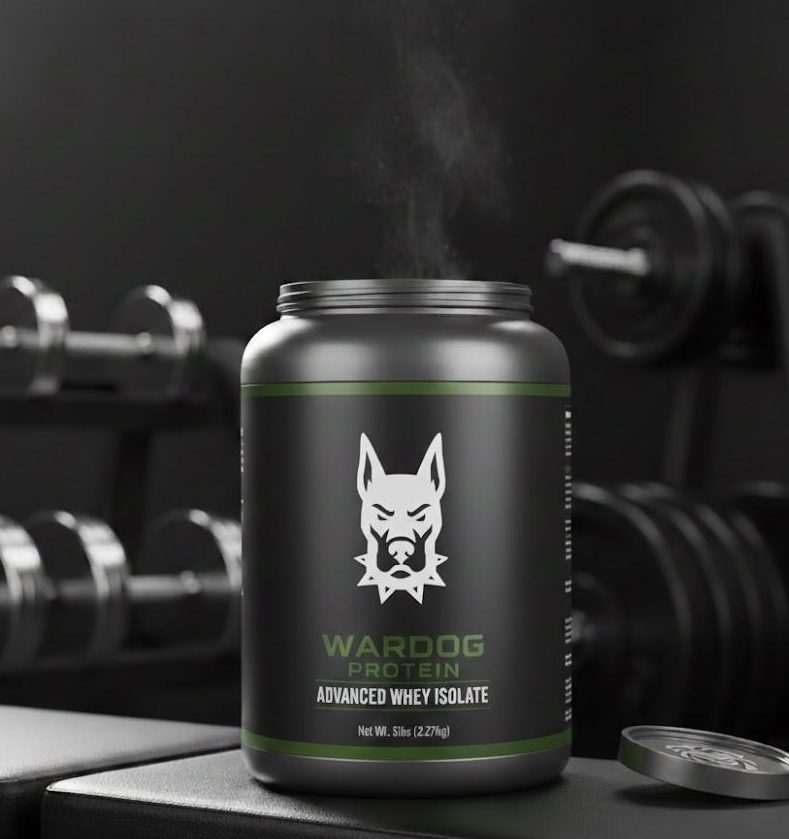
How WARDOG Approaches Protein
WARDOG doesn’t do protein for the sake of having a protein product. We do it because our mission is simple: deliver what works, cut the BS, and support real performance.
Every WARDOG protein formula is built on a foundation of high-quality, third-party tested ingredients. We use whey isolate and premium protein sources because they’re proven to work—not because they’re trendy or cheap. Our formulations are designed with optimal leucine content to maximize muscle protein synthesis, not to hit some arbitrary “30 grams of protein” number that looks good on a label.
We don’t spike our protein with cheap amino acids. We don’t hide behind proprietary blends. Every ingredient is listed clearly because you deserve to know exactly what you’re putting in your body.
And we third-party test every batch. Not because it’s required, but because it’s the right thing to do. When you train hard, you need to trust that your supplements are clean, safe, and effective. Period.
WARDOG protein is formulated for athletes, lifters, and anyone who refuses to settle for mediocrity. If you’re serious about your results, you need a protein that’s equally serious about performance.
Conclusion
Choosing the best protein for muscle gain isn’t complicated, but it does require cutting through marketing hype and understanding what actually drives results.
Protein builds muscle by providing the amino acids your body needs for muscle protein synthesis. High-quality sources like whey isolate and concentrate deliver rapid amino acid absorption and high leucine content, making them ideal for post-workout recovery and muscle growth. Casein offers sustained amino acid release for overnight recovery, and plant proteins can work if dosed appropriately.
Avoid common myths like the idea that more protein is always better or that all protein powders are the same. Focus on quality over quantity: look for clean ingredient lists, third-party testing, transparent labeling, and proven effective doses.
At the end of the day, the best protein for muscle gain is the one that’s high-quality, supports your training goals, fits your budget, and comes from a brand you trust to deliver real results—not just marketing promises.
Choose wisely. Train hard. And don’t settle for anything less than what you deserve.